




Salesforce Employees Demand Action Against ICE: An Open Letter to CEO Marc Benioff

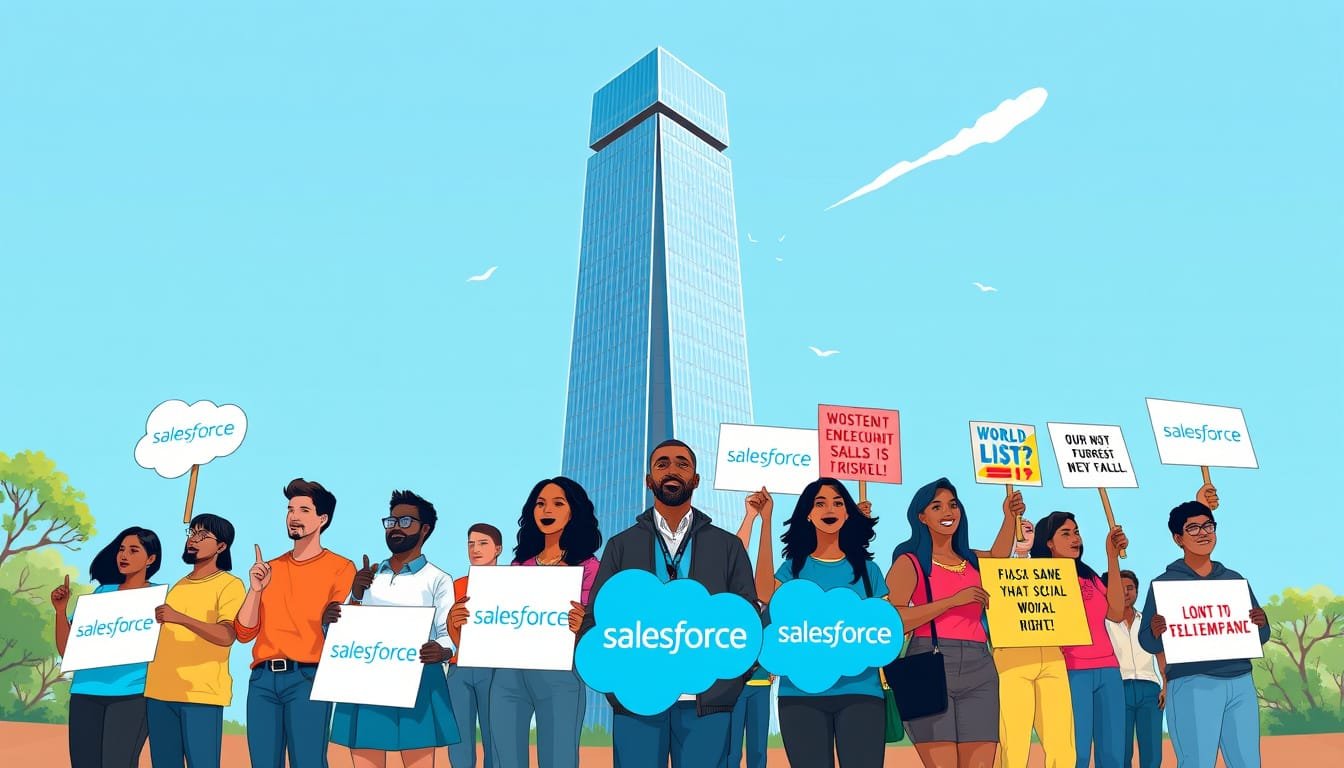
In a significant move reflecting deeper societal challenges, Salesforce employees have raised their voices through an internal open letter directed at CEO Marc Benioff, urging him to take a firm stance against the actions of U.S. Immigration and Customs Enforcement (ICE). Following a contentious remark made by Benioff, where he humorously suggested that ICE might be surveilling international employees, employees are now calling for a clear and public denunciation of the agency’s practices. This article discusses the driving forces behind this letter, the ethical responsibilities of Salesforce, and the critical internal dynamics at play within the company.

Salesforce Employees Demand Action Against ICE: An Open Letter to CEO Marc Benioff
Key Takeaways

  • Salesforce employees are demanding CEO Marc Benioff to publicly denounce ICE’s actions and prevent the use of their technology by immigration agents.
  • The internal letter follows backlash against Benioff’s comments regarding ICE monitoring employees, revealing a significant employee concern over ethical practices.
  • Amidst recent executive departures, the demand reflects deeper unrest within Salesforce regarding its political and ethical stance.

Background of the Open Letter

In a bold move reflecting growing discontent, Salesforce employees have drafted an internal open letter directed towards CEO Marc Benioff, demanding action against U.S. Immigration and Customs Enforcement (ICE). The impetus for this letter stems from a controversial comment made by Benioff during a recent company event where he jokingly insinuated that ICE was monitoring the company’s international workforce, igniting a wave of backlash among staff. The open letter urges Benioff to take a definitive stand against ICE’s practices and to prohibit the application of Salesforce technologies in support of ICE operations, particularly in light of recent tragedies linked to the immigration system. Employees express feeling profoundly let down by Salesforce’s ties to ICE, noting the company’s pitch to support an expansion of the agency’s workforce by hiring 10,000 new agents as a violation of its ethical principles. This agitation emphasizes the need for corporate leaders to prioritize humanitarian values, with employees imploring Benioff to use his platform to publicly denounce ICE and implement stringent policies that restrain the misuse of Salesforce technology in matters of state-induced violence. Historically, Benioff has been politically engaged, championing causes that align with Democratic initiatives, yet his recent alliances with Republican figures have added layers of complexity to his leadership. This situation is compounded by a recent wave of executive departures from Salesforce, suggesting that tensions surrounding these ethical dilemmas may be indicative of broader organizational challenges.

Salesforce’s Ethical Responsibilities and Employee Concerns

As Salesforce employees rally around the open letter, it reflects a growing concern within the tech industry about the ethical implications of corporate partnerships with government entities, particularly those involved in contentious issues like immigration. The uproar isn’t isolated to Salesforce; it echoes across various companies that are reevaluating their roles in socio-political matters. Employees are increasingly vocal about their values, demanding that their organizations act in ways that align with principles of social justice and human rights. This incident at Salesforce signals a pivotal moment where employees are holding corporate leaders accountable, urging them to step beyond traditional business practices and advocate for ethical standards that protect marginalized communities. As the tech landscape evolves, organizations will need to navigate these internal pressures while remaining committed to their foundational values, carving a path that balances profitability with social responsibility.